Can the Fujifilm X100VI handle an event? I took mine to a dark indoor event as my only camera, and about 7 out of 10 photos came out in focus. On paper, that shouldn't have happened. This is my honest take on Fujifilm X100VI event photography after one long night: what held up, what didn't, and where I'd still bring a second camera.
It's for you if you own an X100VI, or you're thinking about one, and somebody just asked if you could take the photos at their event. Nothing you're getting paid for, but something you'd still like to get right.
The Night and What I Brought
The event was for the Peruvian community here in the Netherlands. I volunteer with them, I know the organisers, and that night I was the one taking the photos. Not so long before, I'd sold my Sony camera, so the X100VI was the only camera I had. I wrote about that decision in Is the Fujifilm X100VI Worth It in 2026? What I Gave Up When I Sold My Sony.
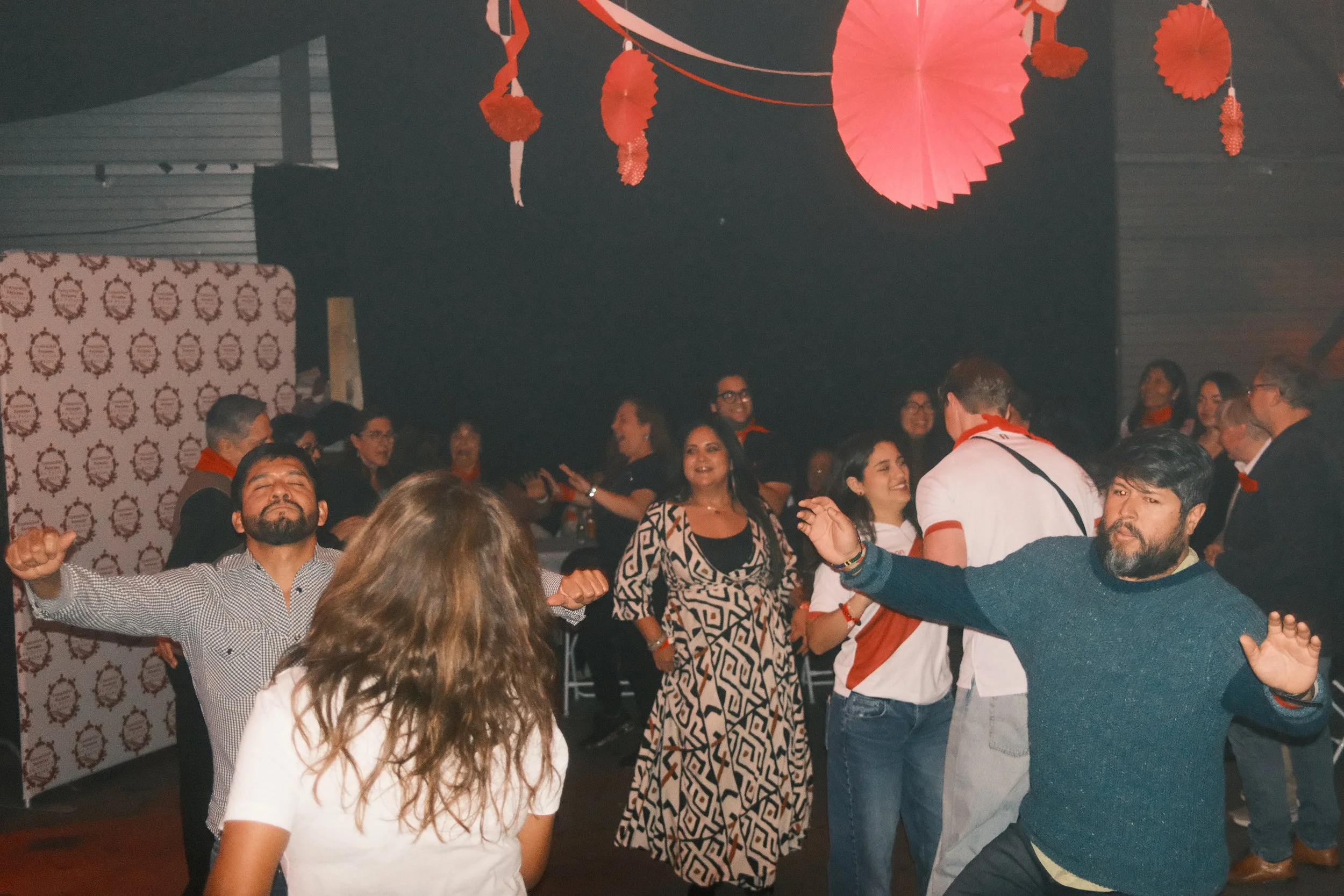
It's also worth saying when and where it was. November, in the evening, indoors. In the Netherlands that's a double whammy on darkness. I knew going in that this was going to be a tough night for a small camera, and honestly that helped. I went in with the mindset of "this camera is going to have its limits tested, so let's not get frustrated about it."
Here's what I brought:
The Fujifilm X100VI itself.
A K&F Concept Black Mist 1/4 filter on the lens.
One SanDisk Extreme PRO 128GB SD card. Only one. More on that later.
Three batteries in total: the one in the camera and two spares from a llano battery kit for the X100VI.
A Godox iM30 mini flash, a small flash that sits on top of the camera and doesn't take much space.
The product links in this post are affiliate links. If you buy through them, I get a small commission, and that helps support what I make.
In the video at the top you can see the photos from the night, so you can judge the results for yourself.
Autofocus in a Dark Room: Where It Struggled
Let me start with the part everybody asks about. Fujifilm has a reputation for autofocus that isn't the best, and you don't even need a dark room to run into it. I also think it's not as bad as some people say. I got decent photos. Part of the problem is that the competition has become very good at this.
But in that dark room, the autofocus hunted. And I mean a lot. Engadget's review also found that focusing on moving subjects with the X100VI is "a bit hit or miss" (Engadget, May 2024), and that matches what I saw once the light dropped.
At one point I switched to manual focus for a little while. That didn't last. Manual focus takes practice if you really want it to work, especially when the moment you're after happens fast, like people moving and reacting to a show. I went back to autofocus.
What did help was eye detection. I turned it on for the portraits I was taking, and with one person in the frame it did a good job of putting the focus where it should be. My job got easier.
The trouble started when the frame got busy. When it was too dark, or when there were too many people in the shot, the camera started jumping from one person to the next. Even two people in the frame was sometimes enough to make it struggle.
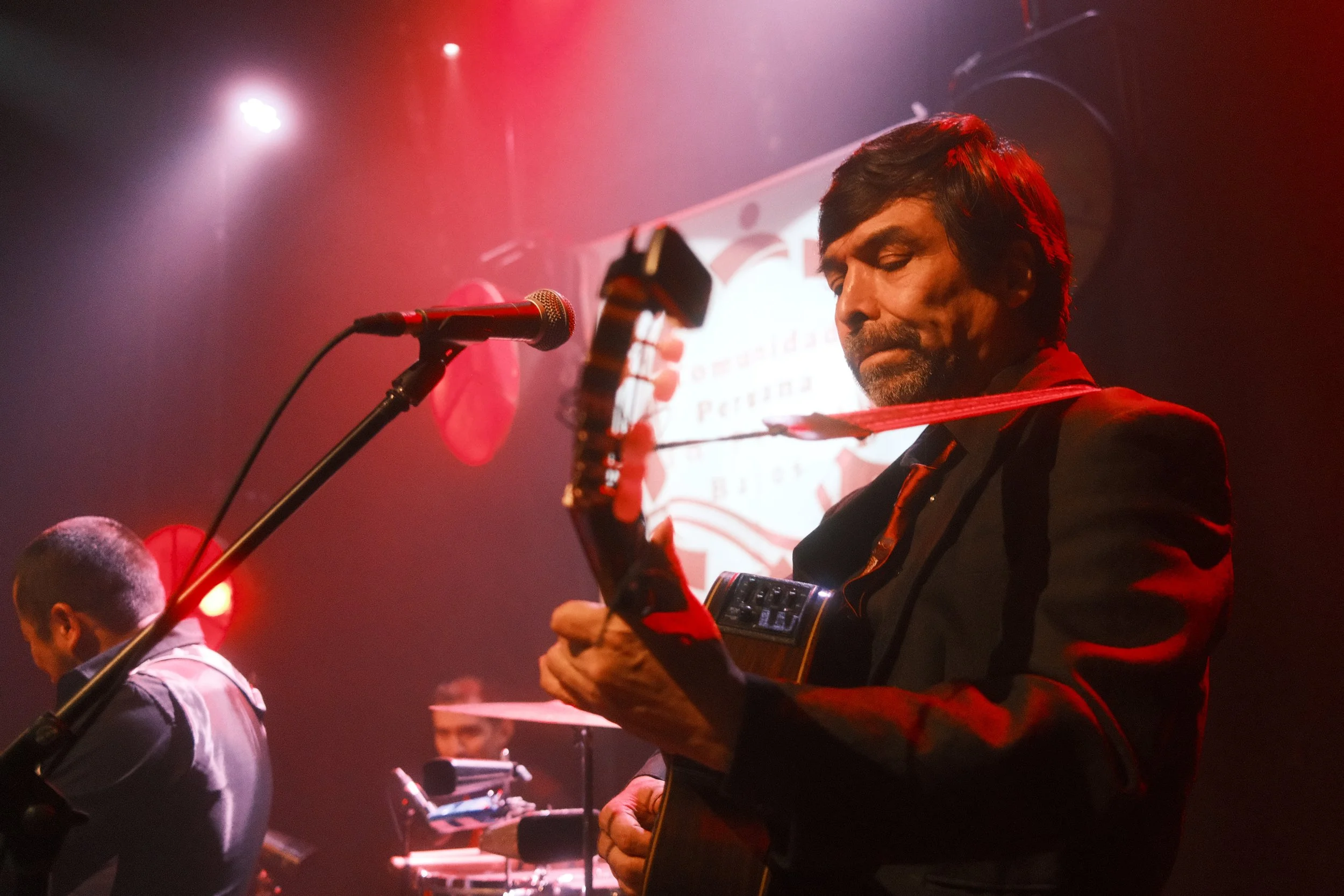
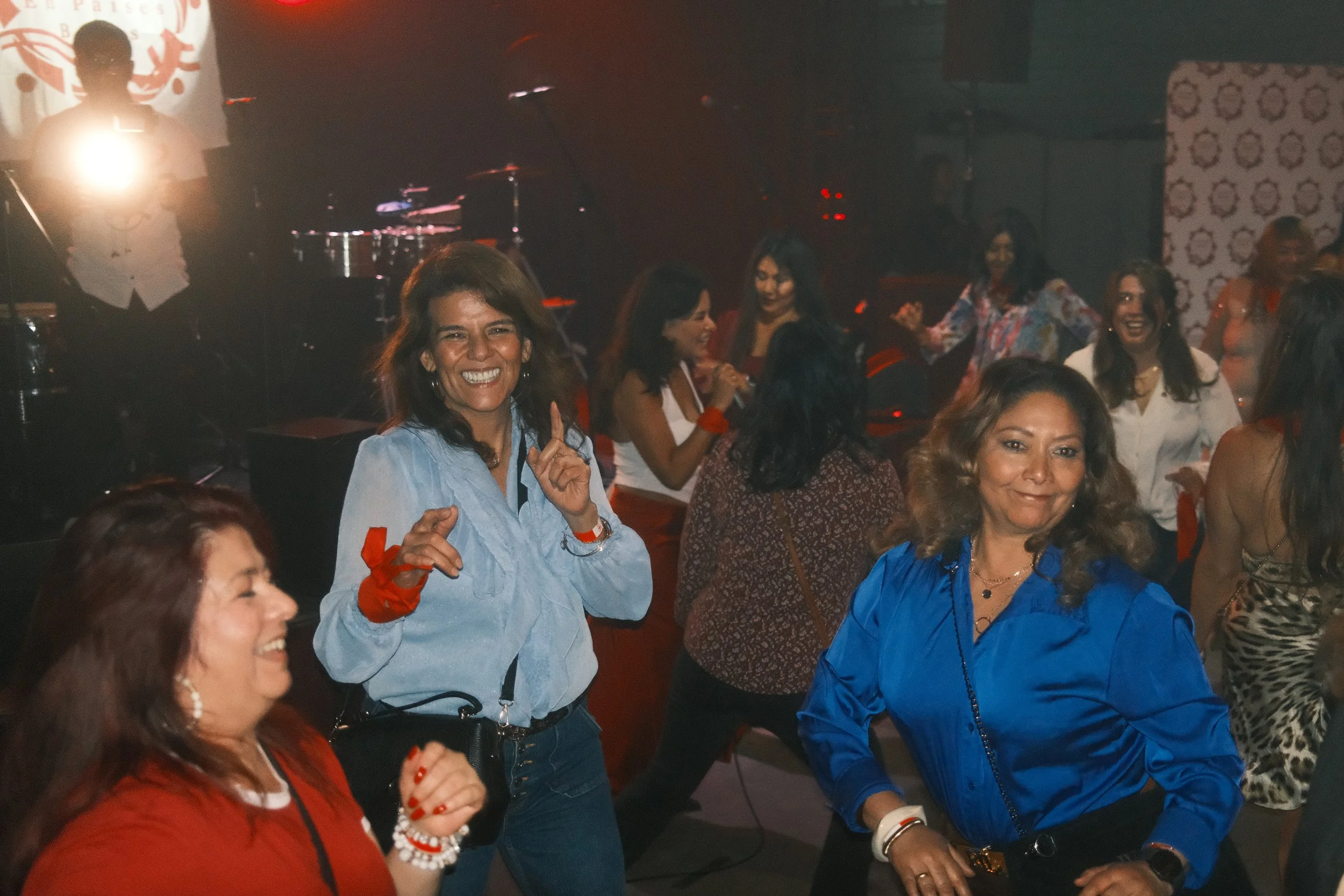
So where did it work best? The close-ups of the band members. The light was better there, their expressions were great, and usually there was one clear subject. Where did I lose the most? People dancing. Dark, fast and crowded is the hardest mix for this camera.
If I had to put a number on it, I'd say about 7 out of 10 photos were okay-ish for focus, and the rest were misses. That's my own rough count, not a measured test.
What I'd do with this if you're heading to your own event: lean on the moments the camera handles well. Portraits with eye detection, close-ups with one subject, people who are standing still for a second. Expect to lose some of the fast, crowded moments. Next time, I want to experiment more with focus myself, because I think there's more to get out of it than I managed on the night.
Using Flash at an Event When You're an Introvert
Flash is a funny one for me. I'm an introvert, and in street photography I almost never use it. You've probably seen photographers walk up to strangers and fire a big flash in their faces. That's not my style. It's too far from my comfort zone. I do own a couple of flashes, but I almost never use them, because the way I shoot on the street is quiet rather than in your face.
An event is different. People are there to have a good time, and a lot of them actually want their picture taken. Being the person with the camera comes with the job. That made me feel more comfortable using flash, even if I wasn't fully at ease at the start of the night.
Something that surprised me: I ended up using the X100VI's built-in flash more than the external Godox. It's small, it's already there, and in a dark room it gave me enough light to work with.
For the most part, flash worked. But it didn't fix everything. When people were moving fast, I still couldn't get them in focus, even with the flash. So if you're planning to use the X100VI with flash at an event, especially with fast-moving subjects, go in knowing that the flash lights the scene but doesn't make the autofocus any faster.
Fixed Lens and Battery Life: The Two That Never Came Up
Two of the X100VI's well-known limits turned out to be non-issues for me that night.
The fixed lens. The X100VI has a 23mm lens, which is 35mm in full-frame terms, and you can't swap it (Fujifilm X100VI specifications). You can buy conversion lenses to go wider or tighter, but I don't own any. So I used the digital zoom, which is really just cropping.
Cropping gets treated as one of the worst sins you can commit with a camera, because you lose resolution. That's true. But the X100VI has a sensor of about 40 megapixels, so there's room to crop. The digital teleconverter gives you 50mm and 70mm framings; at 50mm the photo is cropped to about 20 megapixels, and at 70mm to about 10 (Fuji X Weekly, March 2024).
That helped more than I expected. Yes, it was an event, and yes, people were comfortable having their photo taken. But I still feel a bit awkward getting too close to people. So I zoomed in a few times instead. I could also move around the room freely, and getting close to the band was easy, so distance was never really a problem. After I culled the photos, I honestly couldn't tell which ones were cropped.
Battery life. The X100VI's battery has a reputation for dying early. Fujifilm rates it at about 450 shots per charge with the optical viewfinder, and about 310 with the electronic one (Fujifilm X100VI specifications). Engadget lands on the same numbers.
I brought three batteries and used one. I was taking photos for about four hours, give or take, and that one battery still had about half its charge left. The other two never left my bag. So the camera made it through the night without any trouble.
The part that bothered me came afterwards.
The Single SD Card Slot Is What Bothered Me
The X100VI has one SD card slot (Fujifilm X100VI specifications). I brought one 128GB card and no spare. Looking back, that was a risky move.
During the event, I didn't feel at risk at all. I've never had a problem with a card in the X100VI, and the card wasn't anywhere near full. But the fact that something has worked in the past doesn't mean it will work in the future.
Afterwards, I kept thinking about it. What if that one card had been corrupted after I'd taken all the photos? The event is over. You can't redo anything, and you have no pictures. There is software that can try to recover files from a damaged card, but in my experience it doesn't work every time, and I don't want to depend on it.
Compare that with a camera like the Fujifilm X-T5, which has two SD card slots (Fujifilm X-T5 specifications). If one card fails, you still have the other. That gives you a lot more peace of mind. And I'll be honest: the fact that I've never had a card fail on me, on this camera or any other, has probably given me a false sense of confidence. That's a risk in itself.
This is where my product manager brain turns on. Every product is built for someone in particular, and anything you add for one person costs something for another. Fujifilm's X-T line is the more serious line, with two card slots and maybe a bigger battery. Those things take space, so the price is size. The X100VI was built for a different person: someone who wants a camera small enough to carry every day. It's not pocketable, but it's small enough to be your everyday camera. The safety net of a second card slot is what that choice costs. That makes it a great camera for the moments where a lost card doesn't put your job at risk, and a riskier one for the moments where it does.
So the one thing I'd change next time is simple: bring a second SD card, in case the first one fails in the middle of the event.
My Verdict on Fujifilm X100VI Event Photography
Is the X100VI good for event photography? Yes, with conditions.
About 70% of my photos being in focus is good, in my opinion. But it's right at the line of not being good enough. I'd be more comfortable with a higher number, and knowing that other brands can do better in the same light makes me a little less confident in the X100VI for this kind of work. I don't know where your own line for "good enough" is. That's worth thinking about before you say yes to an event.
If I had to do the same event again with only the X100VI, I'd do it confidently. I know now it can deliver a decent job. I'd just bring another SD card.
If it were a paid gig, a wedding, or anything I absolutely had to deliver, I'd still bring the X100VI, but not as my main camera. It would be my second camera. Another camera would be the workhorse, set up to give clean, standard-looking photos, and the X100VI would be the fun one, maybe with a film recipe on it.
And if you're shooting events for yourself, for your friends or your community, with nobody waiting on a delivery? Don't overthink it. The X100VI is good for that. Bring a couple of SD cards and enjoy the night.
Before Your Own Event
If you're getting ready for one of your first event shoots, I made a video about the things to sort out before you go, beyond the camera and a few accessories: 5 Things to Know Before Your First Event Photoshoot. It covers the admin and the workflow side, so that once it's set up you don't have to think about it and you can just go take photos.
And if you also take your X100VI out on the street, I made a free cheat sheet with the settings I use to make the camera quieter and less noticeable, so you can take more candid photos without people seeing you first. You can get The Introvert's X100VI Setup Cheat Sheet here. If you want the reasoning behind each setting, I go through them in The Fujifilm X100VI Settings That Make a Loud Camera Disappear.
That's my take on Fujifilm X100VI event photography after one dark night: a small camera that held up better than its spec sheet suggests, with one weak spot you can fix by packing a second card.
[PM LENS: a product is built for one main user, and every feature added for someone else costs something; explains why the X100VI has one card slot and a small battery while the X-T line has two slots and a bigger body]
