Fujifilm X100VI vs Ricoh GR III: The Honest Comparison Nobody Asked For (But Everyone Needed)
Almost Eight Years Is a Long Time to Be Loyal to a Camera
For almost eight years, a Ricoh GR lived in a pocket. Not a camera bag. Not a sling. A pocket. And for almost eight years, that felt like enough.
The GR III is one of those cameras that quietly rewires how we think about photography. It is small enough to forget we are carrying it, fast enough to capture moments before we even decide to press the button, and honest enough in its output to make us feel like we are actually seeing the world, not curating it. For anyone drawn to street photography or documentary work, it feels less like a tool and more like a habit.
Then the Fujifilm X100VI arrived. And suddenly, almost eight years of certainty started to wobble.
This is not a comparison of megapixels or autofocus speeds. Those numbers exist everywhere online and they will not help anyone make a better creative decision. What we are comparing here is something more personal: portability, shooting experience, and color. Three things that actually determine whether a camera becomes part of our life or just an expensive shelf decoration.
Round 1: Portability
Let us start with the most straightforward round, because it is also the most decisive.
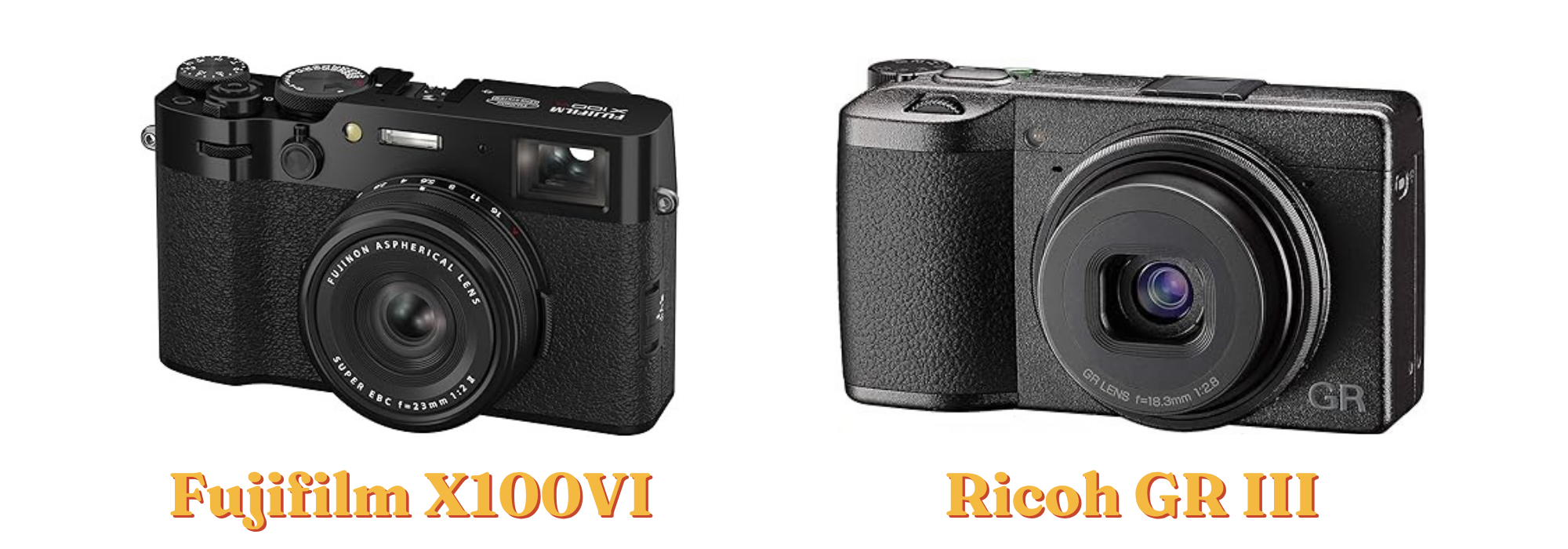
The Ricoh GR III wins this one completely. There is no debate, no nuance, no "it depends." The GR III weighs 257 grams and slides into a regular pair of jeans. Not a jacket pocket, not a coat pocket. Jeans. That level of portability is not just a feature, it is a philosophy. The camera was designed to be with us at all times, and it delivers on that promise without asking anything in return.
The Fujifilm X100VI, on the other hand, is compact but not pocketable. It weighs nearly double the Ricoh and requires a conscious decision every single time we leave the house. Are we bringing the camera today? If yes, we need a bag or a sling. There is no slipping it into a pocket and forgetting about it. And that friction, as small as it sounds, changes our behavior in real and significant ways.
Research on habit formation consistently shows that reducing the number of steps required to perform a behavior dramatically increases the likelihood of performing it. In the context of photography, this means the camera we carry every day will almost always produce more meaningful work than the camera we carry sometimes. The Ricoh removes friction. The Fujifilm introduces it.
This does not make the X100VI a bad camera. It makes it a different kind of camera. But if the goal is to document life as it happens, without planning ahead and without making a deliberate choice to "go out and take photos," the Ricoh GR III is in a different category entirely.
Winner: Ricoh GR III
Round 2: Shooting Experience and Fun
This round is where things get genuinely complicated, because "fun" is entirely subjective and both cameras deliver it in completely opposite ways.
Shooting with the Ricoh GR III is the fun of invisibility. The snap focus system allows us to pre-set a focus distance, typically around two meters, so that when the shutter fires there is zero autofocus lag. The camera captures whatever is in that zone, instantly, without thinking. Combined with its minimal design and one-handed operation, the GR encourages a kind of street photography that feels less like creating images and more like simply existing in a moment while occasionally pressing a button. Nobody looks at a small black box and thinks "photographer." That is the whole point.
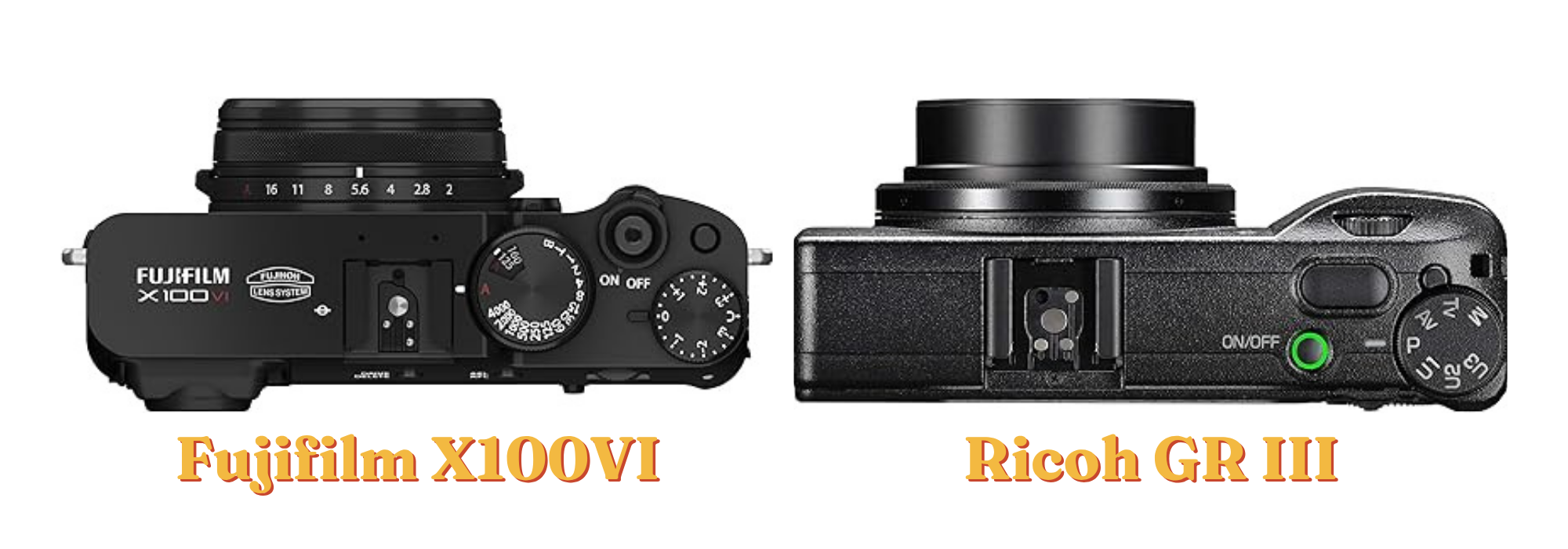
The Fujifilm X100VI offers a completely different kind of fun. It is deeply tactile. The aperture ring clicks. The shutter speed dial turns with intention. The ISO dial requires a physical decision. For photographers who did not grow up with film cameras, this might sound like unnecessary friction. But for creatives who want to feel connected to the act of making a picture, these physical interactions slow things down in the best possible way. We stop making snapshots and start making photographs.
The X100VI also comes with a hybrid viewfinder that the Ricoh simply cannot compete with, because the Ricoh has no viewfinder at all. With a flick of a switch, we can move between a crisp electronic viewfinder that shows exactly how the final image will look, and an optical viewfinder that gives us a clear, real-world view with a digital overlay. For anyone who has spent time with film cameras, the optical viewfinder feels like coming home.
The honest answer here is that neither camera is more fun than the other. They are different kinds of fun for different kinds of photographers. The Ricoh is the tool we reach for when we are living our life and want to capture it along the way. The Fujifilm is the camera we take out when we want to go and make photographs on purpose. Both are valid. Both are genuinely enjoyable. The question is which kind of photographer we are, or want to become.
Winner: Draw
Round 3: Color
Here is where Fujifilm has built an entire brand identity, and for good reason.
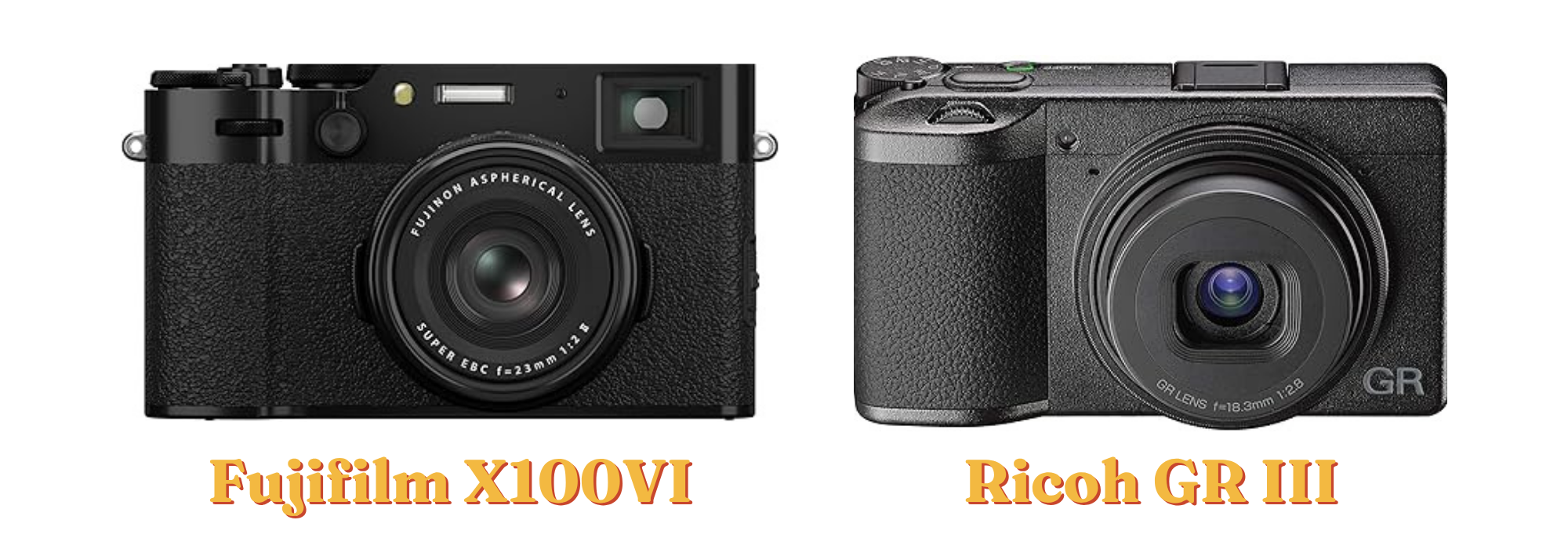
The Fujifilm X100VI ships with 20 built-in film simulations. These are not filters in the Instagram sense. They are carefully developed color profiles built on decades of film science. Fujifilm is one of the very few camera manufacturers that historically produced both camera lenses and film stock, which means the knowledge behind these simulations comes from genuine expertise rather than digital approximation. The result is JPEG output that feels finished directly out of the camera. We can decide the mood before going out, set the simulation, and let the camera bake it into every frame. No editing required.
The Ricoh GR III also has its own color options, most notably the Positive Film look, which has a punchy, vibrant character that has developed a genuine following. There is also a community of users sharing custom recipes online, which extends the camera's color capabilities beyond the defaults. For those willing to spend time exploring, the Ricoh's color output is excellent.
However, the gap becomes visible at the edges. The Fujifilm handles highlights and shadows with a sophistication that only becomes apparent after spending real time with both cameras. The X100VI tends to retain more detail in bright areas while keeping shadow tones rich rather than flat. There is also simply more community content, more apps, more resources, and more inspiration available for Fujifilm shooters than for Ricoh users. That ecosystem matters more than people usually admit.
If the goal is beautiful, finished JPEGs with minimal post-processing, the X100VI is the stronger choice. Not dramatically stronger, but consistently stronger.
Winner: Fujifilm X100VI
So Who Is Each Camera Actually For?
After spending real time with both, here is where we land.
The Ricoh GR III is for photographers who prioritize the moment over the process. It is for anyone who wants a camera that becomes an invisible part of daily life, that is always there without asking anything in return, and that captures the world with speed and stealth. If portability is the single most important factor, there is no better option in this category.
The Fujifilm X100VI is for photographers who love the act of making images. It is for anyone who wants the tactile experience of a traditional camera combined with the conveniences of modern technology. If beautiful out-of-camera color, a genuine viewfinder, and an engaging physical interface are priorities, the X100VI delivers all of that and more.
The final scorecard is: one win for the Ricoh on portability, one win for the Fujifilm on color, and a draw on shooting experience. Both are exceptional cameras. Neither is objectively better. The right choice depends entirely on what kind of creative life we are trying to build.
And honestly? That is a much more useful answer than any spec sheet will ever give us.
The Bigger Lesson
Gear comparisons are everywhere. What is harder to find is an honest conversation about how equipment fits into a real, busy life. The best camera is not the one with the highest resolution or the most film simulations. It is the one that actually gets used.
If this kind of honest, real-world creative content resonates, there is more where this came from. We cover the systems, workflows, and gear decisions that actually matter for photographers who have full lives and still want to make great work.
No hype. No charts. Just the truth.
Gear mentioned in this post:
