Street Photography Confidence: Why Waiting for It Keeps You Home
I have been photographing strangers on the street for more than ten years, and I still get nervous every single time I raise the camera. Not a little flutter. The real thing: the pulse, the hesitation, the second-guessing that arrives before the shutter does. For years I assumed street photography confidence was a thing you accumulate, like frames or lenses, and that one day I would have enough of it. That day has not come, and I no longer think it is coming.
If you are waiting for that same day before you start, this post is about why the wait is the problem, and what I do instead.
Street photography confidence is not the entry requirement
Here is the version I believed for a long time. You go out enough times, the nerves shrink, and eventually you become the kind of photographer who walks up to a stranger without a thought. Confidence first, photographs second.
What actually happens is smaller and less satisfying. The nerves do shrink, a bit. They shrink inside a single session, so the last hour of a walk is always easier than the first ten minutes. They shrink across years too, though far less than you would hope. I feel calmer now than I did when I was both a nervous person and new to photography, and part of that is having a portfolio to point at if anyone asks what I am doing. A website is a surprisingly good anxiety tool.
But a percentage of me is still nervous. That percentage has not gone to zero and I do not expect it to. The useful realisation was not that the fear goes away. It was that it does not have to.
You do not need to reach zero to keep doing this.
The first ten minutes are the worst part of any walk
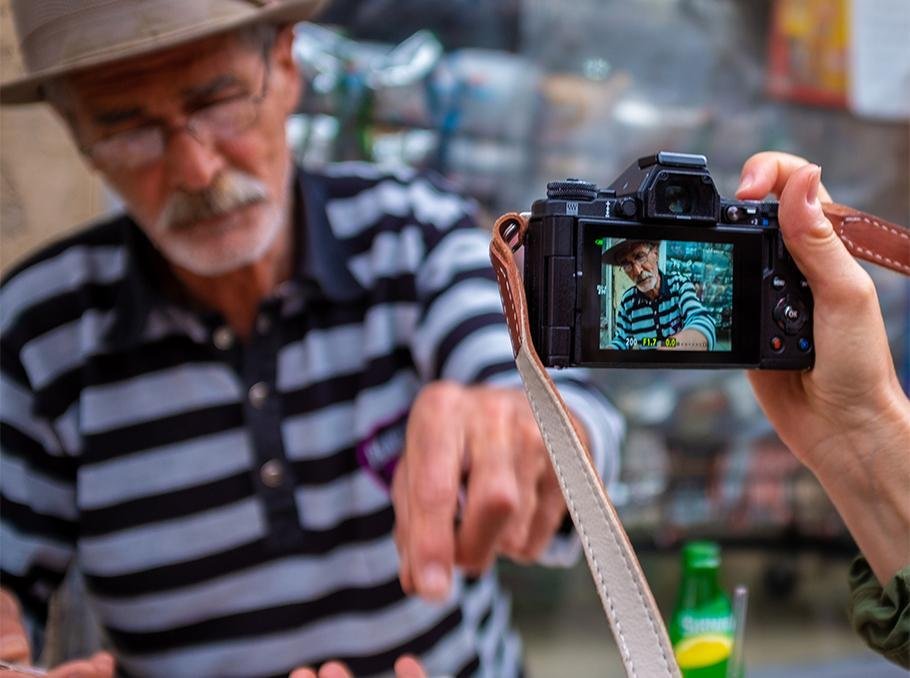
If there is one pattern I would hand to someone starting out, it is this one, because it is the most reliable thing I know about my own nerves.
The hardest moment of a session is never the middle of it. It is the beginning. I arrive somewhere, the camera feels enormous, every person on the street seems to be facing my direction, and the first frame takes far longer to happen than it should. An hour later I am photographing without much thought at all, in the same street, with the same camera, around the same people.
Nothing changed except the number of frames behind me.
Which means the first ten minutes are a cost you pay on entry, not evidence that today is a bad day or that you are not built for this. Two things follow. Go out for longer than you think you need, because a thirty-minute walk is almost entirely made of the expensive part. And do not judge a session by how the start felt. I have come home from walks that began badly and found the frames I kept were all shot in the last third.
The confrontation you are rehearsing almost never happens
Most of the fear is not about the photograph. It is about the scene that plays in your head before the photograph: someone notices, someone objects, someone raises their voice, and everyone on the street turns to look.
Here are my actual numbers. In more than ten years, I have been confronted maybe five times. Not five times a year. Five times, total, and I would guess that is generous.
I assumed I was lucky, or that my city was gentle. Then I made a video about what to say when someone confronts you, and the comments told a different story. Photographer after photographer said the same thing: they had also never really been challenged. One of them, twenty years in, put it plainly: confrontations are rare, and most people are no more inclined toward a confrontation than you are.
What happens instead
The thing that has happened to me far more often than a bad confrontation is this: someone walks over because they are curious. What camera is that. What lens. Can I see the picture. Sometimes they ask me to take their photograph, which brings its own strange pressure, because now it has to be good.
That is the mismatch worth sitting with. You are rehearsing an argument. The actual event, on the rare occasion it happens at all, is usually a conversation.
Two honest caveats. This depends on what you photograph, where, and who is in the frame. There are places and moments where people are more guarded, and there are subjects that invite an objection no matter how carefully you work. Take the numbers as mine, not as a promise. But they do point in one direction: it happens less than you think.
If the confrontation itself is what worries you most, I wrote the script I use in Read: What to Say When You're Confronted During Street Photography.
The bag is a decision you make in advance
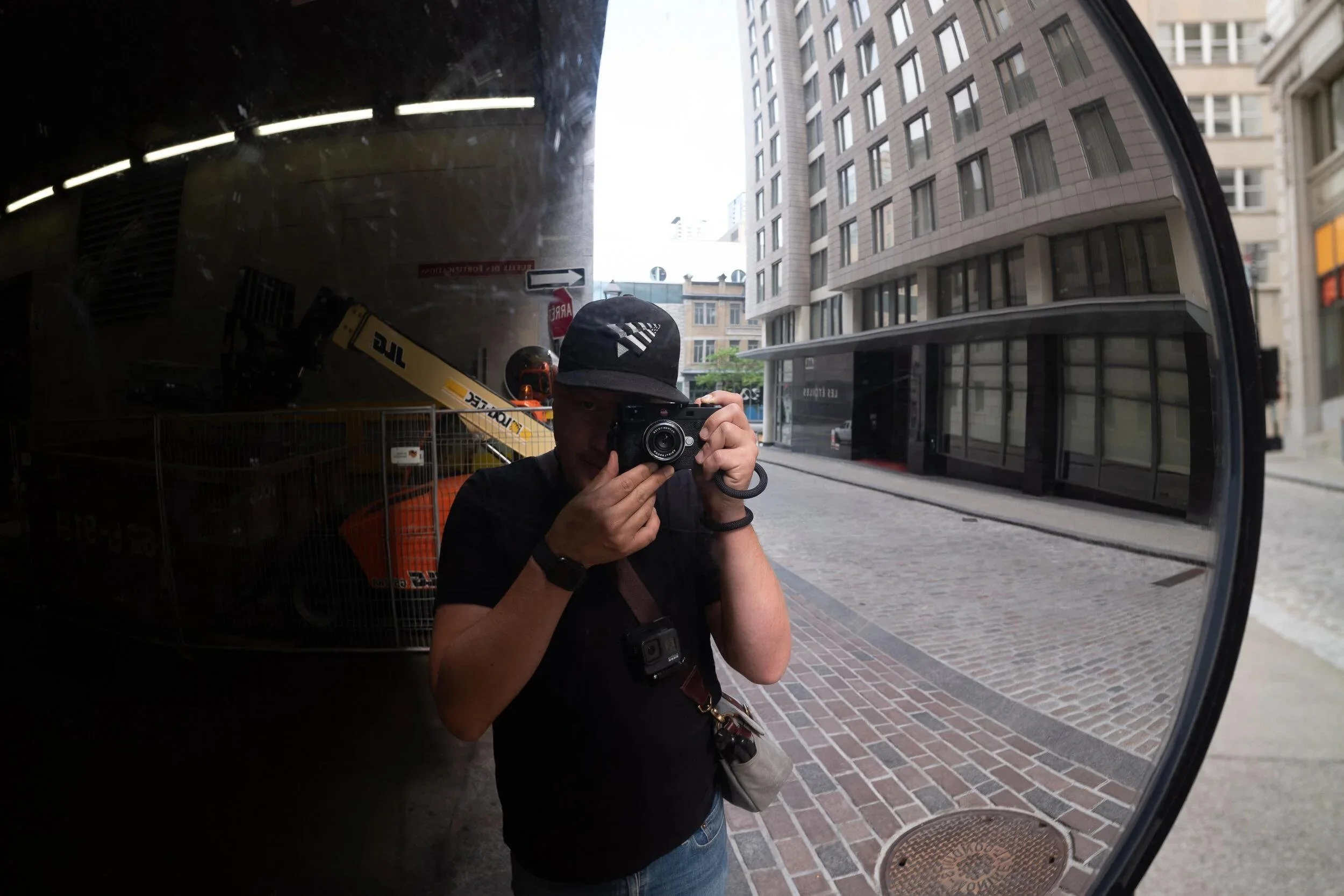
Before any of the mental work, there is a physical detail that changes my behaviour more than any pep talk: whether I bring a bag.
When I carry a camera bag, I have given myself a hiding place. The camera goes in, and the camera stays in. I stand on a street I like, look at a scene I want, and start negotiating with myself. Maybe the light is not that good. Maybe the composition is weak. Maybe the person will think I am a creep. The negotiation always wins, because taking the camera out is now a deliberate act with an audience.
When I carry the camera and nothing else, the negotiation never starts. I am already visible. I am already the person with a camera. Being seen is no longer a decision I have to make, it is the state I am already in, so I may as well photograph.
That is not a personality change. It is removing a step.
What replaces confidence: be a tourist in your own city
This is the one I do every time, and it has nothing to do with being brave.
I pretend I am a tourist in my own city.
Picture yourself somewhere far from home. You pull the camera out without thinking about it. You photograph a doorway, a queue, a man reading a newspaper, and you do not spend one second worrying about how you look doing it. Why not? Because you do not know these people, they do not know you, and you will almost certainly never see any of them again.
Now the part that took me years to notice: all three of those things are also true on your own street.
Your own city is the hard one
I am more self-conscious at home than anywhere I travel. That sounds backwards until you name the actual fear, which is not being seen. It is being recognised. Someone you know rounding the corner while you are crouched over a puddle reflection.
So I ask myself a question that has never once produced a worrying answer. How often do you genuinely bump into the same person on your own street, neighbours aside? For me, close to never. And when I do pass the same face twice, I do not register it, because I am not paying attention to strangers either. Neither are they. Everyone is inside their own bubble, running their own day.
Once that lands, the tourist frame stops being a trick you play on yourself and starts being a more accurate description of where you actually are.
How to run it
There is not much to it, which is the point.
Pick a part of your city you would happily photograph if you had flown in that morning. Walk it the way a visitor walks it, slower than your commute, looking up. Give yourself permission to photograph the obvious thing, the thing a local would consider beneath them. Do not hide the camera. Hiding it is what reads as furtive, and several photographers in my comments made exactly that point: a concealed camera looks worse than a visible one.
One line of care, because the reframe can be taken too far. Being a tourist in your own city is about lowering your self-consciousness, not lowering your manners. It is not permission to push a lens into someone's face.
If the invisibility question is the one you are stuck on, Read: Best Cameras for Shy Street Photographers covers the gear side of the same problem.
The partial fix: photographs where nobody's face shows
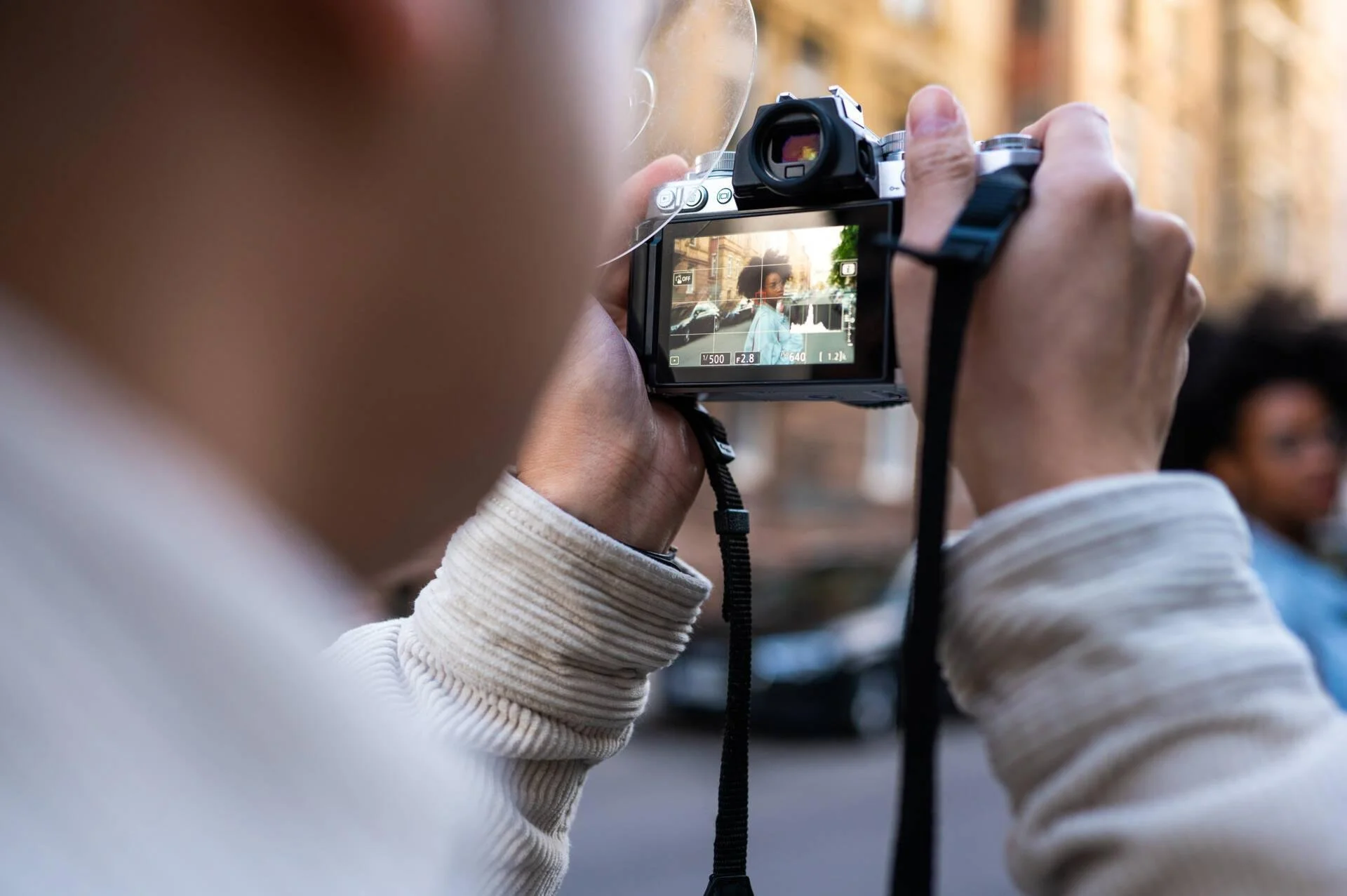
The second thing that helps me is a change in what I photograph rather than how I feel about photographing it.
Lately I am more careful about frames that include a recognisable face. The reason is not the law, which varies by country and is a separate conversation. It is closer to a personal ethic that has shifted as the technology has: once a face is online, what can be done with it is no longer something I control.
So I have drifted toward silhouettes, backs, wider scenes, people as shapes inside a place. This may change again. In a few months I might go back. It is genuinely unsettled for me.
What I did not expect is that it also lowers the nerves. If someone asks, I can show them the frame and their face is not in it, and the conversation ends there. Knowing that in advance makes me quicker to lift the camera.
I want to be careful not to oversell this one. It works for certain kinds of photographs and not others, and if your style depends on faces it is no help at all. It is a partial fix, and the tourist reframe is the one doing most of the work.
I went deeper on the privacy side of this in Read: Street Photography Privacy in 2026: The Real Risk Moved From the Street to the Upload Button.
What my day job taught me about acting while nervous
I work as a product manager at a tech company, and there is one habit from that work that transferred directly to the street.
Product teams do not wait until they feel certain before releasing something. Certainty is not available. You do not know how people will respond until they respond, and holding the thing back until the doubt clears means holding it back forever. So you agree on a bar that is good enough, you release, and you learn from what comes back. The confidence, when it arrives, arrives afterward. It is a result, not a prerequisite.
Street photography works the same way, and I had the order backwards for years. I was treating confidence as the thing I needed before going out, when it is the thing that slowly accumulates from having gone out. Not to a hundred percent. Just to slightly better than last time, which is all any release is.
The tourist reframe fits that neatly. I am not changing myself before I go. I am changing the conditions I am testing myself in, and letting the rest follow.
What to try this week
Nothing here requires becoming a different person, which is the only reason any of it has stuck for me.
Leave the bag at home so the camera has nowhere to hide. Walk one part of your city as if you flew in this morning. Stay out longer than the first awkward ten minutes. Photograph the obvious thing. Keep the camera visible. If faces are the sticking point, work with backs and silhouettes for a few walks and see whether the frames still say what you wanted.
And let the nerves come. Ten years in, mine still show up on the first street corner, every time. The photographs happen anyway.
If this is the kind of thing you think about, Still Shooting is where I write about it at more length. One letter a month, no hype, mostly the questions that do not have clean answers. You can join at stillshooting.beehiiv.com.
[PM LENS: shipping does not wait for confidence, a defined bar does, and confidence is what accumulates afterward]
I'm Cesar, I take photos around a day job.
