The Fujifilm X100VI Settings That Make a Loud Camera Disappear
The Fujifilm X100VI is probably the most recognized compact camera of its generation. People stop to look at it. On a quiet street, almost nobody ignores it. If you love street photography but would rather not be noticed while you do it, that is a real problem, and it is the one this guide solves. Below are the exact Fujifilm X100VI settings I run, dial by dial and menu by menu, tuned around one question: does this choice help me stay invisible, or does it give me away?
This is not a review. It is a walkthrough of every control, set up for one specific person: someone who feels a little too exposed out on the street. I carried a Ricoh GR for seven years, from 2019 to 2026, before the X100VI became my daily camera, so most of these choices come from years of trying to be the least interesting person on the block. If you are still deciding whether this is the right body for you at all, I put the X100VI in context against its rivals in Read: Best Cameras for Shy Street Photographers.
Why the X100VI Gets Noticed
The X100VI looks like a camera. That sounds obvious, but it is the whole problem. The retro body, the silver top plate, the little lens out front: people read all of it as "real photographer," and real photographers get watched. A phone does not get a second glance. This camera does. So before we touch a single menu, accept the premise. You are not going to make the X100VI look like nothing. You are going to make it behave like nothing. Quiet, fast, and free of the small tells that tell a stranger you just photographed them.
That distinction matters, because most setup guides optimize for image quality alone. I care about image quality too, but I weigh every option against a second cost: attention. A setting that produces a marginally nicer file but makes the camera beep, flash a green light, or hunt loudly for focus is a bad trade for someone who would rather not be seen. If you want my honest take on whether the camera is worth owning in the first place, that is a separate conversation I had in Read: Fujifilm X100VI Review: Was the Hype Worth It?. For this guide, I am assuming you already own it, and you just want it to stop announcing you.
Start With the Dials
The outside of the camera is where most of your decisions actually live. Get these right and you will barely touch the menus once you are out.
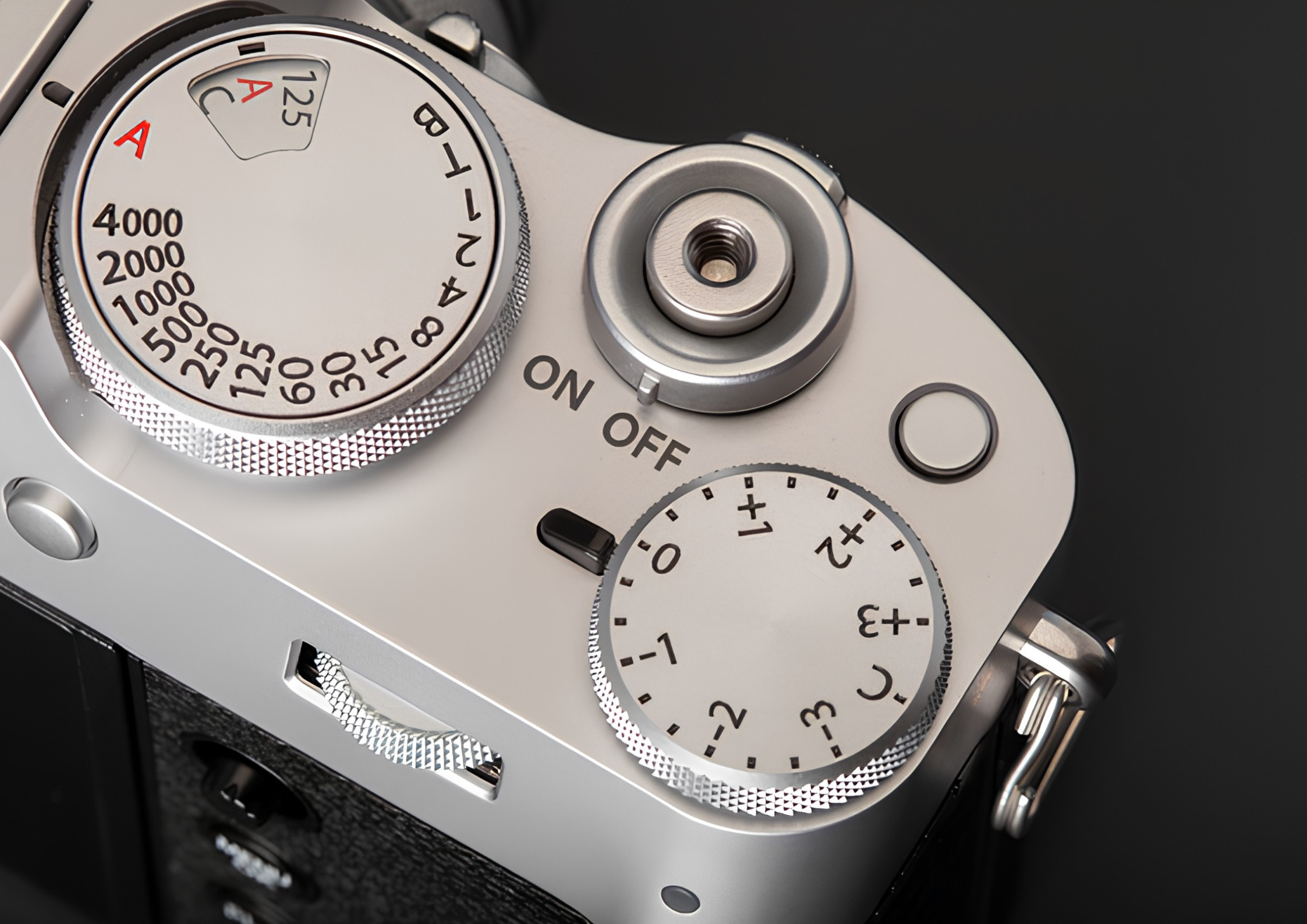
The aperture ring
The aperture ring is the one closest to the body. It controls how wide the lens opens. The lowest number, f/2, lets in more light and gives you a blurrier background. The highest, f/16, does the opposite: less light, more of the scene in focus. I stay at f/8 most of the time. At f/8 a wide slice of the street is already sharp, which means I do not have to nail focus perfectly on a moving subject. That single choice removes a whole category of stress.
Shutter speed and ISO
The big top dial is the shutter speed dial. It controls how long the sensor sees light. Faster freezes motion but lets in less light. I leave it on A, automatic, about ninety percent of the time. Lift that same dial and turn it and you are now setting ISO, the sensor's sensitivity to light. Higher is brighter but grainier. I leave ISO on A as well, even when the rest of my setup is manual.
One number worth memorizing: my minimum shutter speed is 1/80. The rule of thumb is to use double your equivalent focal length. The X100VI is a 35mm equivalent, double of 35 is 70, and since there is no 1/70 on the dial, 1/80 is the safe floor that keeps handheld frames from going soft.
Exposure compensation
The small dial on the corner is exposure compensation. Nudge it up for a brighter photo, down for a darker one. It only does anything when one of your other settings is automatic, which in my case is true, because shutter and ISO are both on A. I keep mine at plus one third, and only because the film recipe I use is built around that. If you are fully manual, ignore this dial completely.
The Focus Settings That Keep You Quiet
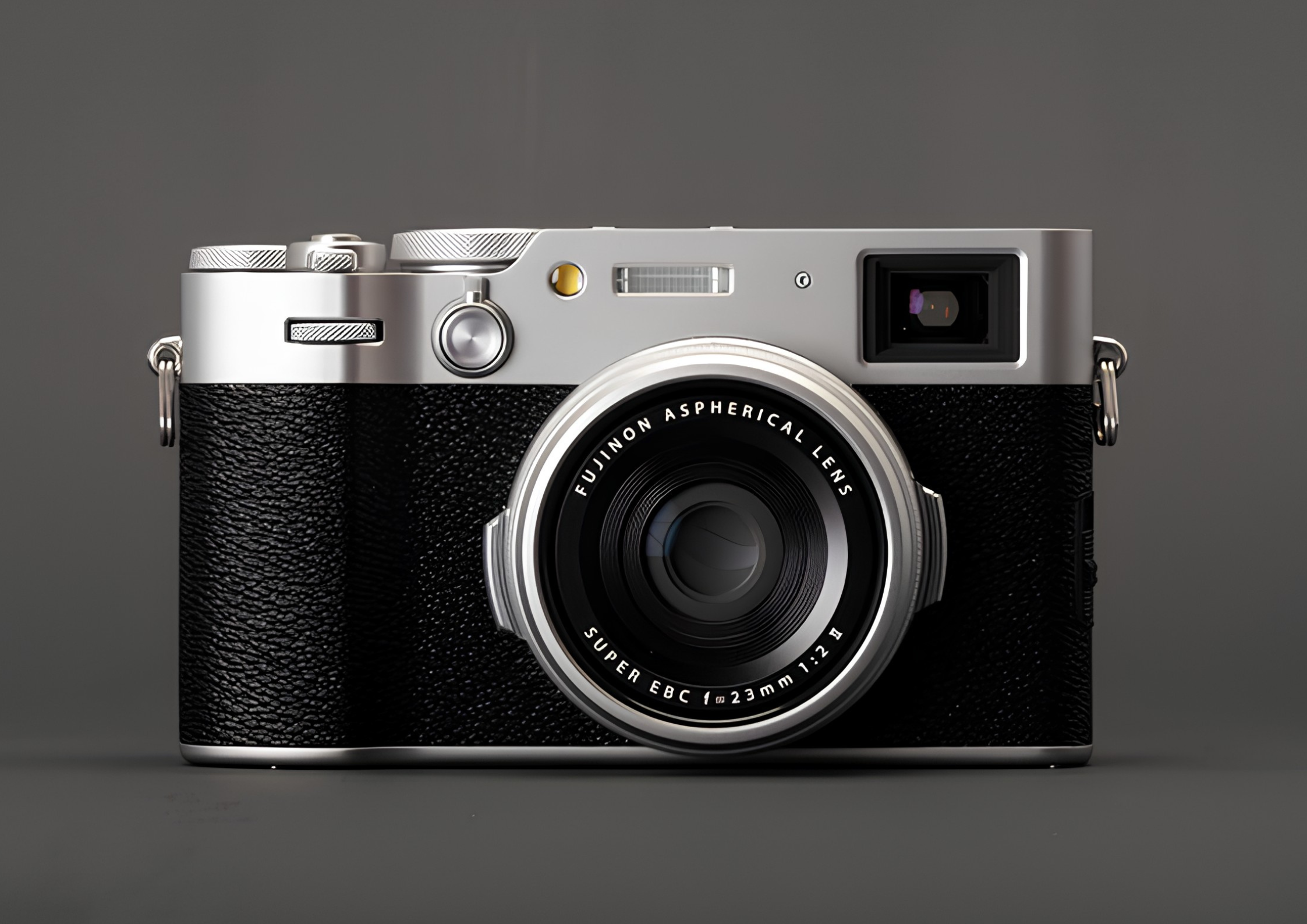
The autofocus and manual focus menu is long, but only a handful of settings change whether you blend in. These are the ones I would not skip.
Turn the AF illuminator off. This is the bright green assist light that fires in dim scenes, and it is the single biggest giveaway on the camera. Nothing says "I just photographed you" like painting a stranger with a green beam. Off, always.
Turn pre-autofocus off. It keeps the lens focusing constantly, even before you press anything. It feels responsive, but it drains the battery faster and makes a soft motor noise the whole time. Off.
Set the autofocus mode to single point and keep the number of focus points at 117 rather than 425. More points sound better, but they make you click around the joystick far more on the street, and fiddling with the camera is exactly what makes you look conspicuous. Fewer points, faster decisions.
Leave face and eye detection off, and subject detection off too. On the street you often do not know who or what your subject is until the moment arrives, and these modes can grab the wrong thing at the wrong time. Turn on autofocus plus manual focus, though. It lets you fine-tune focus by hand after the camera locks, which is a quiet safety net. For manual focus assist, I use focus peak highlight set to red so I can see what is sharp at a glance.
The Image Quality Menu and the Portra 800 Recipe
This is where the look of your photos gets decided, and it is also where Fuji buries a few traps.
I record fine plus RAW at the largest 3:2 size, with RAW set to uncompressed. The JPEG is what I keep; the RAW is insurance I usually delete later, so I do not bother compressing it. Film simulation is set to Classic Chrome, but only because of the recipe I run.
The setting people miss is dynamic range. There are three steps, DR100, DR200, and DR400, on top of auto. Each one recovers more highlight detail, but each one also demands a minimum ISO. DR400 needs at least ISO 500. DR200 needs ISO 250. DR100 needs ISO 125. If you force DR400 and your ISO cannot reach 500, the camera quietly ignores you. I keep mine on DR400 because my recipe calls for it.
A few more from this menu: grain effect strong and large, because I want my files to feel a little filmic straight out of camera. Sharpness at minus two, because I run a magnetic black mist filter that already softens the image. Clarity at minus three. High ISO noise reduction off, because if a frame is noisy, I would rather decide what to do about it than let the camera smear it.
The recipe itself is Ritchie Roesch's Kodak Portra 800 v3, from the excellent Fuji X Weekly site. If you have ever copied a recipe and wondered why your results looked nothing like the example, the reason is almost always one of these menu mismatches, which is a rabbit hole I went down in Read: Why Your Film Presets Feel Fake (And How to Fix It).
The Settings That Make the X100VI Silent
Sound is attention. The X100VI can be made genuinely silent, and that changes how it feels to carry.
Set the shutter type to electronic shutter. The mechanical shutter makes a small click and caps out at 1/4000. The electronic shutter makes no noise at all and goes faster, with the one caveat that very fast motion can show a slight rolling-shutter skew. For street work, silence wins. Then go through the camera and zero out every other sound and light: turn off the beeps, the self-timer lamp, and that AF illuminator again if you have not already.
Leave the flash off entirely. Flash equals being seen, full stop. Putting light in a stranger's face is not my style and it is the fastest way to turn a quiet moment into a confrontation. The X100VI also has a built-in four-stop neutral density filter, which cuts light so you can stay at a wide aperture in bright sun. I keep it off by default and only switch it on when I genuinely need it.
If the thing actually holding you back is not the camera but the nerves, the settings will only take you so far. I wrote up the most common traps separately in Read: Street Photography Anxiety? Avoid These 9 Mistakes.
The One Workflow Change That Makes It Almost Invisible
Everything above is setup. This is the part that did the most to make the X100VI disappear in a crowd, and it comes down to how you focus.
I use one of two approaches. The first is back-button focus with continuous autofocus. Continuous autofocus normally hunts the whole time, but I have moved focus onto the back button, so the camera only searches when I hold it. Press to lock, release, recompose, and take the frame. Held down it behaves like continuous focus; let go and it acts like single focus and holds. You get both behaviors from one button, with no hunting in between.
The second, and the one I lean on most now, is full manual focus set to a fixed distance. I switch to manual, set the focus distance to three meters, and pair it with f/8. At that aperture and distance, a deep zone of the street is acceptably sharp, so I can lift the camera and capture without it focusing, beeping, or lighting up. Nothing moves, nothing makes a sound. You stop looking like someone taking a photo and start looking like someone who happens to be holding a camera. That is the whole game.
My Setup at a Glance
Here is the short version: aperture at f/8, shutter on A, ISO on A, exposure compensation at plus one third, electronic shutter, and either zone focus at three meters or back-button continuous focus, running the Portra 800 v3 recipe at DR400.
I put the version of this that matters for staying invisible onto a single page: the aperture, shutter, and ISO starting points, the off-switches that kill the camera's tells, and the recipe. It is free, and you can grab the Introvert's X100VI Setup Cheat Sheet here. I would rather you carry the one-pager in your pocket than rewatch the menu section ten times.
A few pieces of gear come up across this setup, all linked below (affiliate, no extra cost to you):
SmallRig thumb grip for a steadier one-handed hold
Peak Design Cuff wrist strap so the camera sits low and quiet
K&F Concept magnetic black mist filter for the softened look I dial my sharpness around
llano battery kit if you run the camera all day
The Part Nobody Sets Up For
The hardest part of owning a camera like this is not the dials. It is the period after the honeymoon, when the spec sheet stops mattering and the only question left is whether you actually want to carry it out the door. Good Fujifilm X100VI settings make the camera quiet. They do not make you braver. That part comes from going out anyway, frame after frame, until the street stops feeling like a stage.
That slower, more honest side of camera ownership is what I write about in Still Shooting, my monthly letter. One email a month, no hype. If that sounds like your kind of thing, you can read it here.
I'm Cesar, I take photos around a day job.