The Only 5 X100VI Street Photography Settings You Actually Need
The Fujifilm X100VI has one of the deepest menu systems of any compact camera. It is also one of the best cameras for street photography. The irony is that the more time you spend in those menus, the worse your street photos get. I learned this the hard way. After weeks of tweaking every custom button and recipe, I stripped my X100VI street photography settings down to just five choices that handle my entire workflow. Here is exactly what they are and why they work.
Why Simpler X100VI Street Photography Settings Produce Better Photos
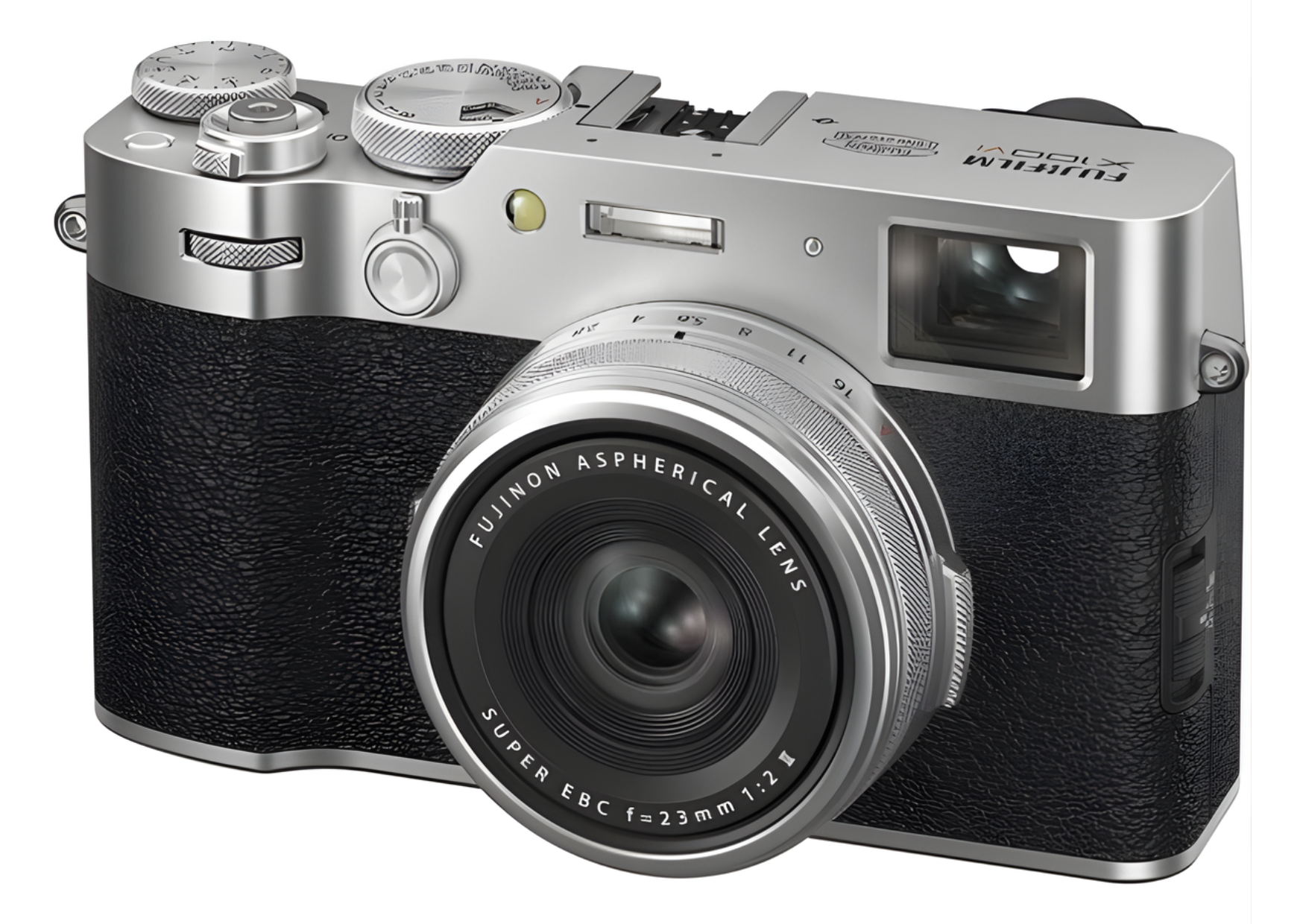
Street photography is reactive. A moment appears, exists for a second or two, and disappears. If you are buried in a menu when that moment happens, it is gone. No amount of technical perfection can bring it back.
The Fujifilm X100VI gives you an enormous number of options. That is its strength for studio work, travel, and video. But on the street, every option is a decision, and every decision takes time. The goal is not to master every function. The goal is to make the camera invisible, to build a setup so simple that it becomes an extension of your eye rather than a barrier between you and the scene.
These five settings are the framework I use every time I walk out the door. They handle the technical decisions so I can focus entirely on light, composition, and story. If you have been drowning in menu options and custom configurations, this is your permission to let most of them go.
The Exposure System: Auto ISO, Aperture, and the Compensation Dial
Three of the five settings work together to form a complete exposure system. Once configured, they handle nearly every lighting situation you will encounter on the street without any manual intervention.
Auto ISO: The Foundation
This is the most critical setting for street photography. Light on the street changes constantly. You walk from a sunlit plaza into a dark alley in three steps. Adjusting ISO manually for every transition is a recipe for missed moments and blurry photos.
The X100VI lets you save three custom Auto ISO presets and switch between them with the rear dial. No menus, no screen tapping. Here are the three I use:
Auto ISO 1 (Daytime default): Minimum shutter speed at 1/250s. This freezes most normal street motion, people walking, gesturing, turning corners. Base ISO at 125, maximum at 6400. This preset covers everything from direct sun to deep shadow.
Auto ISO 2 (Overcast and shade): Minimum shutter speed at 1/125s. Softer light means I can accept a slightly slower shutter, which keeps the ISO lower and the files cleaner. Same ISO range of 125 to 6400.
Auto ISO 3 (High-speed priority): Minimum shutter speed at 1/500s for fast, chaotic crowds. I am telling the camera that sharpness is the absolute priority and I will accept more noise to get it. Maximum ISO goes up to 12800 for this one.
By configuring these three presets, I have offloaded the vast majority of my exposure decisions to the camera. It adapts silently while I focus on what is happening in front of me.
Aperture at f/4: The Starting Point
With ISO and shutter speed handled automatically, the only manual decision left is aperture. I keep the camera in Aperture Priority mode, and my default starting point is f/4.
Why f/4? It is the perfect middle ground. You get gentle subject separation from the background without the razor-thin depth of field you get at f/2, which makes missed focus far too easy in fast street situations. At f/4, enough of the environment stays in focus to give context and tell a story. You see the person, and you see the world they are in.
Starting at f/4 also gives flexibility. In darker areas, I open up to f/2.8 or f/2. For zone focusing where I want everything sharp, I stop down to f/8. But f/4 is home base. Combined with the X100VI's Face and Eye Detection, this aperture makes the camera remarkably reliable for candid moments. The Fujifilm X100VI locks focus, the aperture provides just enough separation, and Auto ISO keeps the exposure correct. Point, compose, click.
Exposure Compensation: The Creative Touch
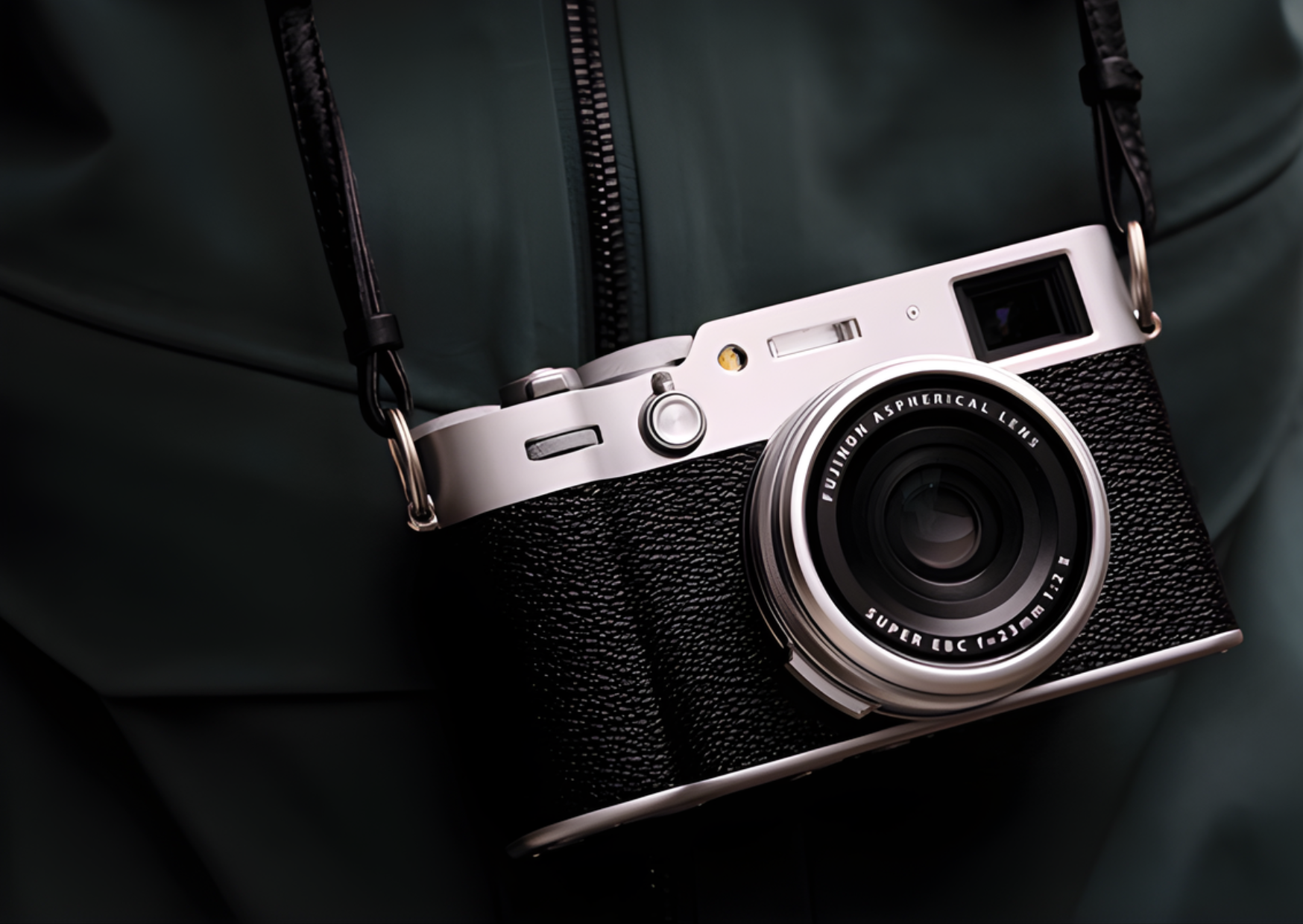
The exposure compensation dial is the final piece of the exposure system. With Auto ISO handling the technical side and aperture set, this physical dial becomes a brightness slider for the real world.
My rule is simple. In bright sun, I dial down to -0.3 or -0.7 to protect highlights and add mood. On overcast days, I push to +0.3 or +0.7 to prevent the camera's meter from making things look dull. At night, I might go to -1.0 or lower to keep blacks truly black and let city lights pop.
This dial is tactile, fast, and requires zero menu interaction. It is the last 10% of creative control, the part where I add my personal spin to the scene. The camera handles the math. I handle the feeling.
Film Simulations: The Reason I Stopped Editing
This is where the X100VI truly won me over, and it is the setting that might save you the most time. Instead of processing RAW files after every outing, I rely on Fujifilm's film simulations to deliver finished JPEGs straight out of the camera. I keep three recipes saved to my custom settings dial for instant access.
C1: Portra 800 (Nostalgic Negative base). This handles about 90% of my color work. Warm, slightly muted tones with beautiful skin rendering and that classic analog character. It works in sun, shade, golden hour, and overcast gray. It just works.
C2: Kodak Plus-X 125 (Acros base). My go-to black and white. Fine grain, smooth tonal transitions, and a classic mid-century feel. The Acros simulation delivers deep blacks and crisp whites with remarkable detail. When using this one, I capture JPEG plus RAW. The JPEG is ready to share immediately, and the RAW file is there if I ever want a color version of the same frame.
C3: Velvia (built-in). Not a custom recipe at all, just Fujifilm's vivid simulation straight from the camera. Punchy, saturated colors with strong contrast. I reach for it when the light is already dramatic and I want the scene to feel bold and alive, especially on trips.
By limiting myself to three film stocks, I have learned to see the world through them. I choose the mood before I take the photo, not after. It is not about fixing things later. It is about choosing the right soul for the image before it exists. If you are curious about how I arrived at these choices after testing the X100VI extensively, you might find the full breakdown useful. Read: Fujifilm X100VI Review: Was the Hype Worth It?
Custom Buttons: Speed and Silence on the Street
My philosophy is to stay out of the menus entirely. Every second spent navigating screens is a moment lost on the street. That is why the fourth setting is a minimal custom button setup built for speed and discretion.
I only customize two function buttons.
Fn1: Spot Metering. In high-contrast street scenes, the camera's default metering can get fooled by bright backgrounds or deep shadows. One press of Fn1 switches to spot metering. I aim at the key area, lock exposure, and recompose. This protects highlights and gives that contrasty, filmic look without any post-processing.
Fn2: Built-in ND Filter. This is one of the most underrated features on the entire camera. In bright, harsh sunlight, if I want to photograph at f/2 or f/2.8 for a portrait, the ND filter cuts the light down so I can use the aperture I want without overexposing. No external filters, no extra accessories. One button press.
Beyond what I turn on, the most important customization is what I turn off. All camera sounds and beeps are disabled. I use the electronic shutter for completely silent operation. As an introvert, being invisible on the street is a genuine advantage. A silent camera lets you get closer and capture authentic moments without making anyone turn their head. The X100VI becomes a quiet observer rather than an announcement.
If you are building out your X100VI for travel as well as street work, the accessories that complement this setup matter too. Read: 5 Upgrades That Actually Fixed the Fujifilm X100VI for Travel
The Complete X100VI Street Photography Setup
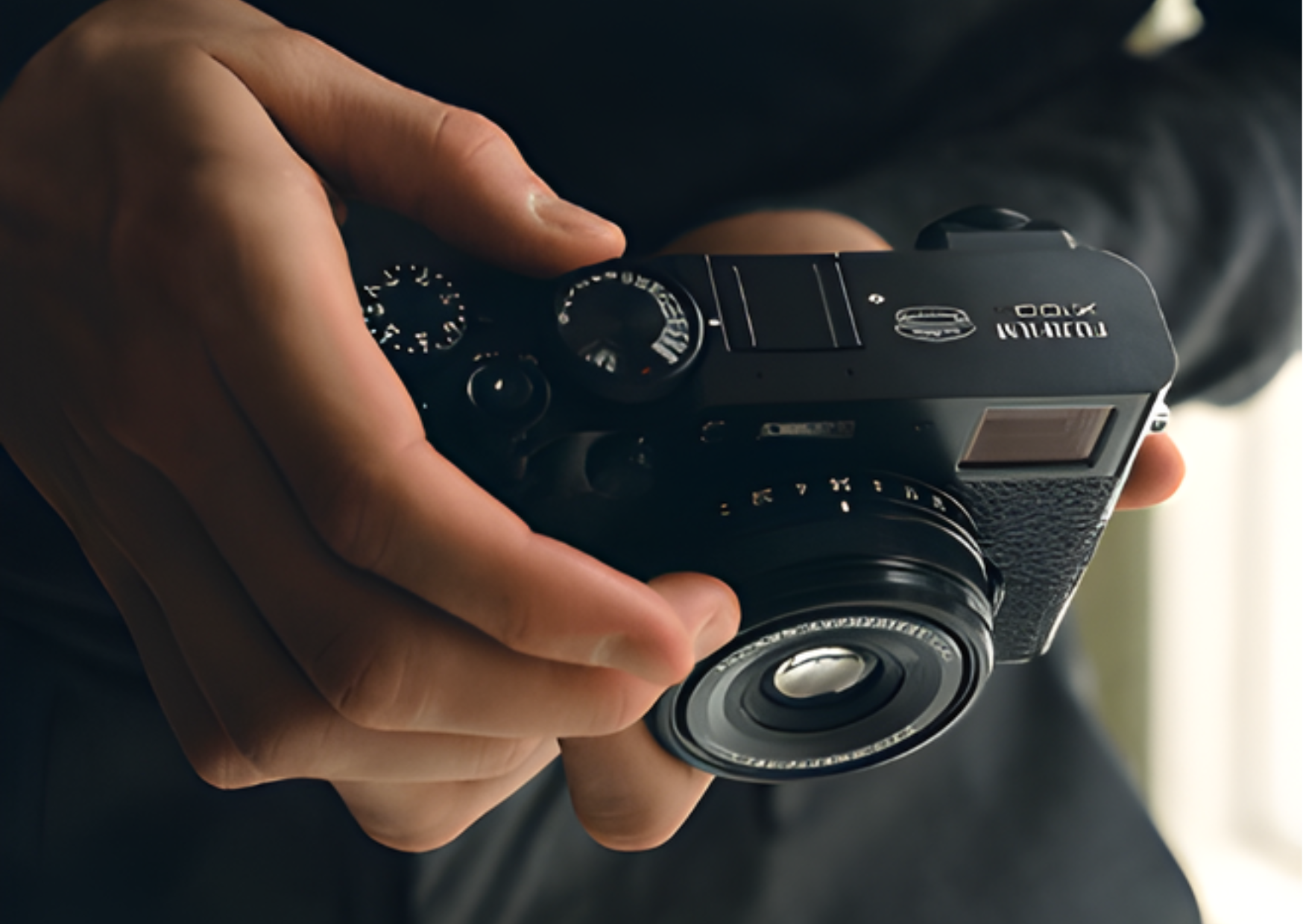
Five settings. Three Auto ISO presets to handle changing light. Aperture at f/4 as the default starting point. Three film simulation recipes saved to the custom dial. Two function buttons for spot metering and the ND filter. And the exposure compensation dial for creative fine-tuning.
That is my entire X100VI street photography settings workflow. No complex custom configurations, no 20-page recipe spreadsheets, no spending more time on settings than on actually being present in the world.
If you want the exact recipe values, every Auto ISO preset number, and a step-by-step walkthrough for programming all of this into your own X100VI, I put together the X100VI Street Photography Starter Guide. Every setting from this post, plus a quick-reference card you can pull up on your phone while you are out. The link is at the top of this page.
The best camera is not the one with the most features. It is the one that disappears. Strip your settings back, limit your choices, and go capture something.
If you want one honest letter a month about photography and gear, no hype, my newsletter Still Shooting is where that happens. Join here.
