Why Street Photography Advice Doesn't Work Everywhere
Ten years into street photography, the most confrontational moment I have ever had did not happen where I expected. It was not in Peru, where I grew up. It was at a market fifteen minutes from my front door, here in the Netherlands. That surprised me, because almost every piece of street photography advice I had ever followed quietly promised the opposite. It told me the risk lived somewhere else. Somewhere less orderly. Somewhere abroad.
Here is the part most tutorials leave out. Street photography advice is not universal. It is local. The tips you hear from a photographer in New York or London are shaped by the exact streets those photographers walk every day. And that advice quietly assumes three things about the place where you live: the local culture, the law, and your safety. Break any one of those three assumptions, and the whole approach stops working. That is what I want to walk through here, using ten years of getting it wrong and right on two different continents.
The street photography advice everyone repeats
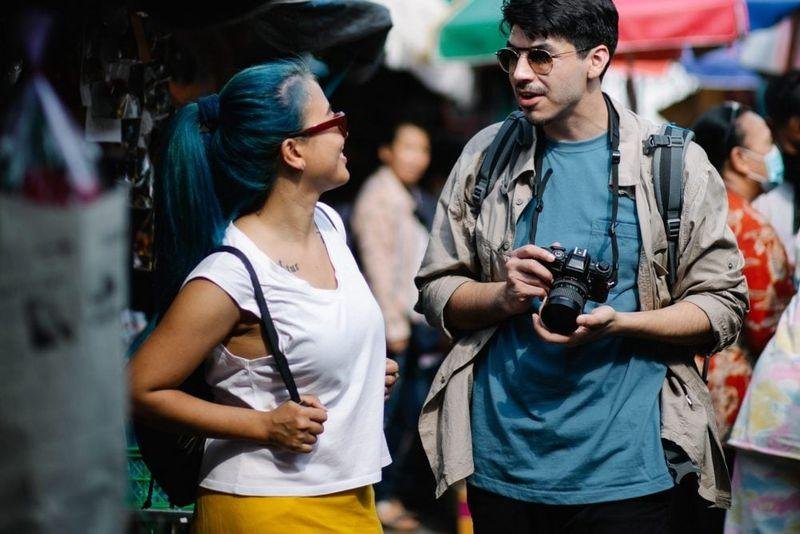
If you have watched more than a couple of tutorials, you already know the standard playbook by heart. Get close. Stay candid. Do not ask. And if someone confronts you, here is your comeback line. I have handed out some of that advice myself. I even made a whole video about what to say when you get confronted on the street.
But after that video went out, one comment stopped me cold. A viewer from Indonesia wrote that my advice was solid if you live in a global north country, where the ethics around photographing strangers are a little different from the global south. Where he lives, the normal thing is to strike up a conversation with your subject first, and then take the photo. Yes, it takes the candidness away. But it is the safest way to work there.
He was right, and I felt it straight away, because I am from the global south too. In Peru, and in a lot of places that are not Western Europe, being upfront and talking to people before you photograph them is not a compromise. It is simply how things are done. And as an introvert, that was always the part that never sat easily with me. I like being the fly on the wall. I love a candid frame. But candid is a luxury, and whether you get to enjoy it depends entirely on where you happen to be standing.
If you want the tactical version of handling those tense moments, I wrote about that separately here: What to Say When You're Confronted During Street Photography. This post is about the layer underneath it: why the advice itself changes from place to place.
Confrontation is rarer than you think
Before we get to those three assumptions, I want to kill a myth, because it is the one that keeps most people from ever starting. The myth is that street photography means constant confrontation. It does not.
In more than ten years of doing this, I have been confronted a handful of times. Not dozens. A handful, and never more than ten. And the most aggressive one, the single moment that actually stuck with me, happened at one of the biggest markets in Rotterdam, early in the morning while the stalls were still being set up. Someone walked over, clearly annoyed, and told me I should not be taking pictures without asking first. I said, calmly, no problem, I am sorry, and I moved on. They never asked me to delete anything. It did not escalate. That was the worst of ten years, and it happened in one of the safest countries I have ever lived in.
I am not the only one who has noticed this. After my confrontation video, two comments said it better than I could. One photographer wrote that in all his time shooting he had never once been challenged, but he had been asked to take someone's photo more than once. Another, who has been doing street photography for over twenty years, wrote that confrontations are rare, and that most subjects are no more inclined toward confrontation than you are.
That last line is worth sitting with for a second. Flip the camera around. If you were walking down the street and noticed a photographer had you in the frame, would you march over and start a fight? Most people would not. I know I would not. When people approach me on the street, they are usually curious, not angry. They want to know about the camera, or they take photos themselves, or they just want to see the picture I made. Now that I think about it, I have been approached out of curiosity far more often than I have been confronted out of anger. You are much more likely to make a friend out there than an enemy.
If the fear of confrontation is the thing keeping you inside, that is the part to hold onto. And if you want a gentler on-ramp built for introverts, start here: Street Photography for Introverts: How to Capture Confidently Without Overwhelm.
The three things street photography advice assumes about where you live
So confrontation is rare. But rare is not the same as identical everywhere. The reason the advice does not travel is that it silently assumes three conditions are true wherever you point your camera. When even one of them is false, the playbook quietly breaks. Here they are, one at a time.
One: the local culture
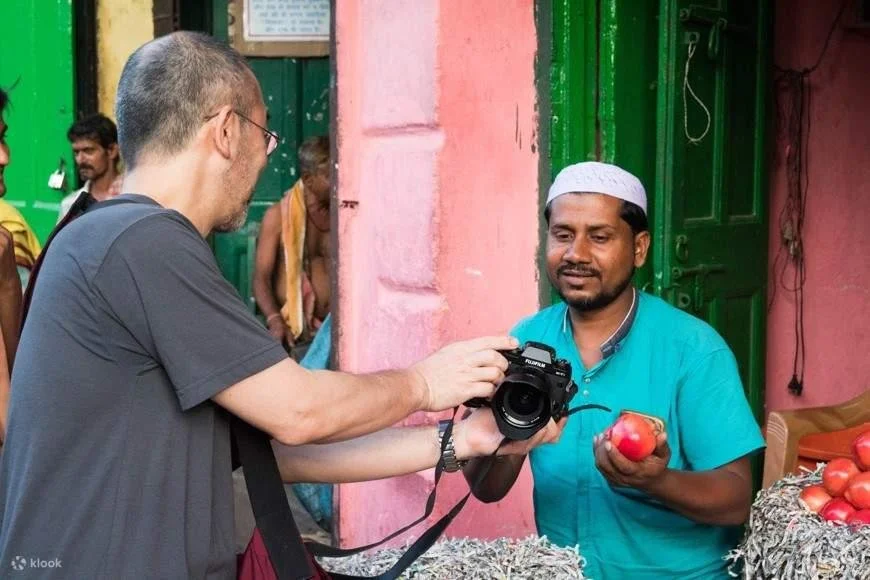
The first assumption is cultural. The candid, do-not-ask approach assumes a culture where photographing strangers in public reads as normal, or at least neutral. In a large part of the world, it simply does not. The Indonesian photographer's rule, talk first and shoot second, is not timidity. It is cultural fluency. He is not being a worse street photographer. He is being a better local.
My favorite example of this also came from a comment, this one from Peru, my own country. A photographer was taking a picture of a man selling newspapers in central Lima. The man shouted at him not to take the photo. So the photographer walked over, apologized for bothering him with the camera, and started chatting. It turned out the man's son was a photographer and knew a bit about cameras. After that short conversation, the man forgot all about asking him to delete the picture, and the photographer simply went on his way. Sometimes a little conversation does more than any rehearsed comeback line ever could.
The lesson is small and cheap. Before you shoot in a new place, do the tiniest bit of research on the local culture around photographing people. It costs you nothing, and it changes everything about how you are received on the street.
Two: the law
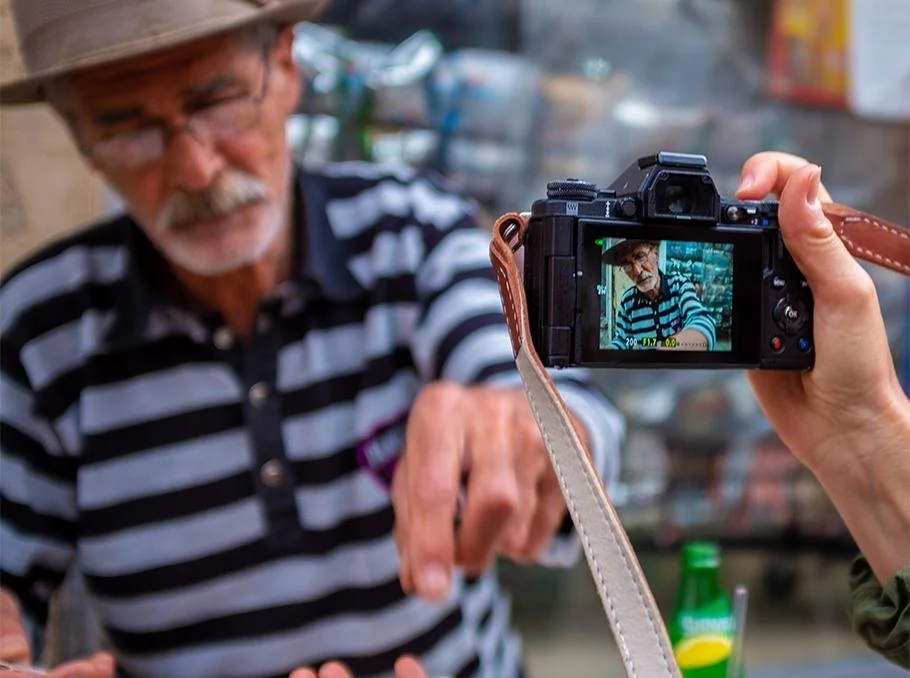
The second assumption is legal, and this is the one people ignore the most. The candid advice assumes that photographing people in public is broadly legal. In the United States, the United Kingdom, and here in the Netherlands, that is largely true. But it is not true everywhere, and the gap can be wide.
In several countries, publishing a recognizable photo of a person can legally require their consent. France has famously strong image rights. Germany's laws restrict publishing an identifiable person without permission. Hungary went further with a 2014 law that can require consent even to take the photo in the first place. I am not a lawyer and this is not legal advice, but the point holds: the rules genuinely change at the border. What is completely fine on one street can put you on the wrong side of the law a short flight away. I dug into the modern version of this, where the real risk has quietly shifted from the street to the upload, here: Street Photography Privacy in 2026: The Real Risk Moved From the Street to the Upload Button.
The takeaway is the same as with culture. Spend ten minutes on the law around publishing photos of people wherever you are going. Not every country operates the same way, and assuming they all do is how you end up in a situation you never needed to be in.
Three: your safety
The third assumption is the one that changed how I shoot more than culture or law ever did, and it is the one almost no tutorial mentions at all. It is your own safety.
In my experience back home, the people were never the real problem. My gear was. The thing I was quietly afraid of, and honestly still am whenever I go back, is theft. Walking around an unfamiliar area with a visible camera can make you a target, and you have to be honest with yourself about whether that is the reality where you are standing. It often is, and cruelly, it is often true in exactly the places that make the most interesting photographs. The streets with the most life are not always the safest ones, and if you only ever shoot where it is completely safe, a lot of your pictures start to look like the same copy and paste scene.
So I adapt. In riskier places I stick to safer areas, or I go out with a group of friends instead of wandering alone. And if the worst ever does happen, my rule is simple: you hand the gear over. It is not worth fighting for. No photograph, and no camera, is worth your safety, and nobody who actually cares about you would ever tell you otherwise.
The one question to ask before you shoot anywhere
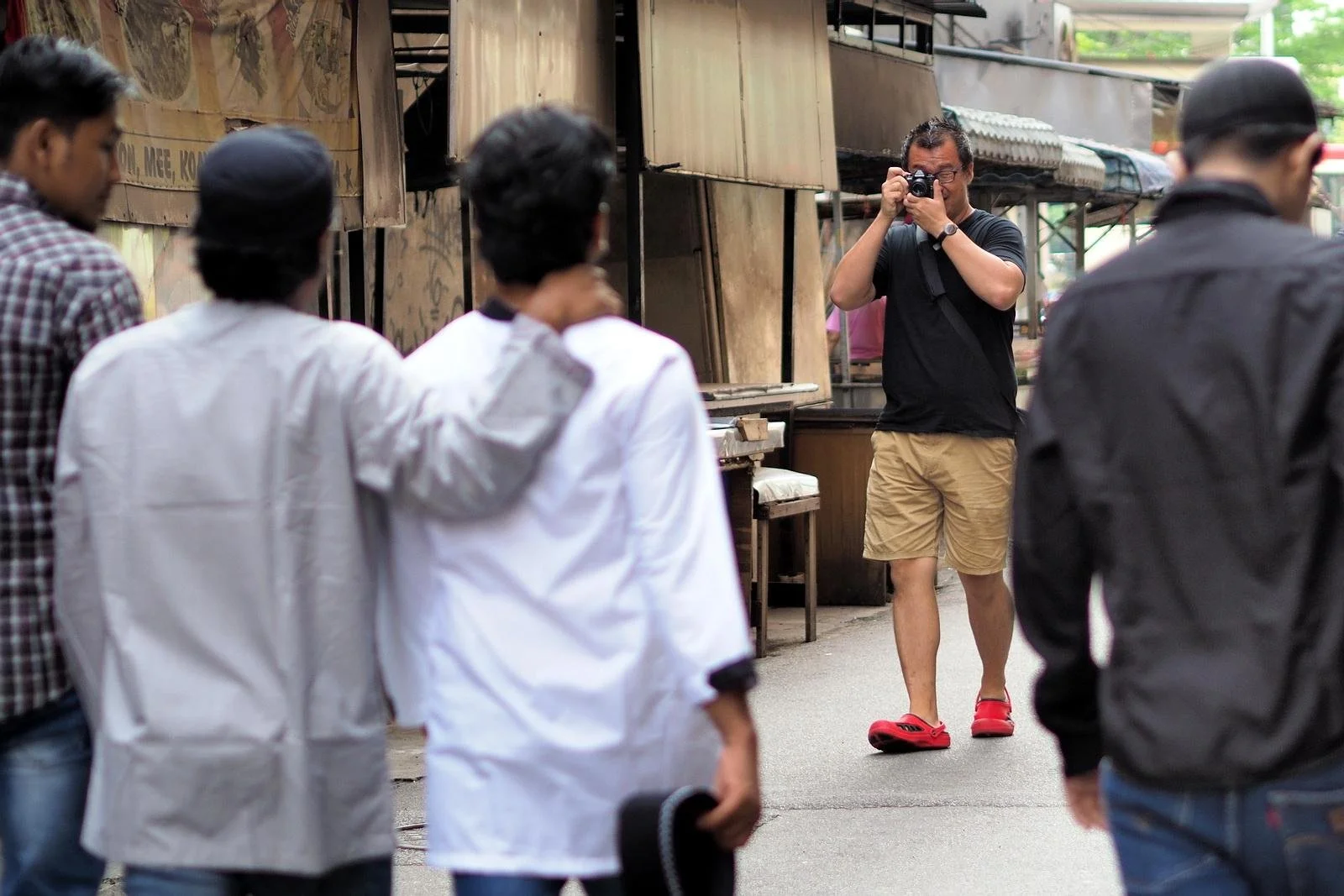
So where does this leave the standard street photography advice? Not wrong, exactly. Just local. It was written by people honestly describing the streets they know, and it stops fitting the moment you step onto streets they have never walked.
Instead of carrying one universal rule everywhere, carry one question. Before you photograph in a new place, ask yourself: what is the real barrier here? Is it the people? Is it the law? Is it my safety? The answer might be just one of those, or it might be all three at once. Whatever it turns out to be, that is the thing you adapt to. That single question travels far better than any list of tips, because it forces you to look at the specific place you are actually standing in, instead of the generic street the advice quietly imagined.
That is the whole shift, and it is a small one. Stop asking how to do street photography, and start asking how to do street photography here.
I would genuinely like to know where you land on this. Where do you shoot, and what actually stops you from doing it more often? Is it the people, the law, your safety, or something else entirely that I did not cover? Tell me about it. The best conversations I have ever had about this work have not come from tutorials. They have come from photographers comparing the very different streets they call home.
I'm Cesar, I take photos around a day job.
